How to Play Word Battle
Master the letter race, the no-repeat rule, and the timer tactics that keep you in the chair.
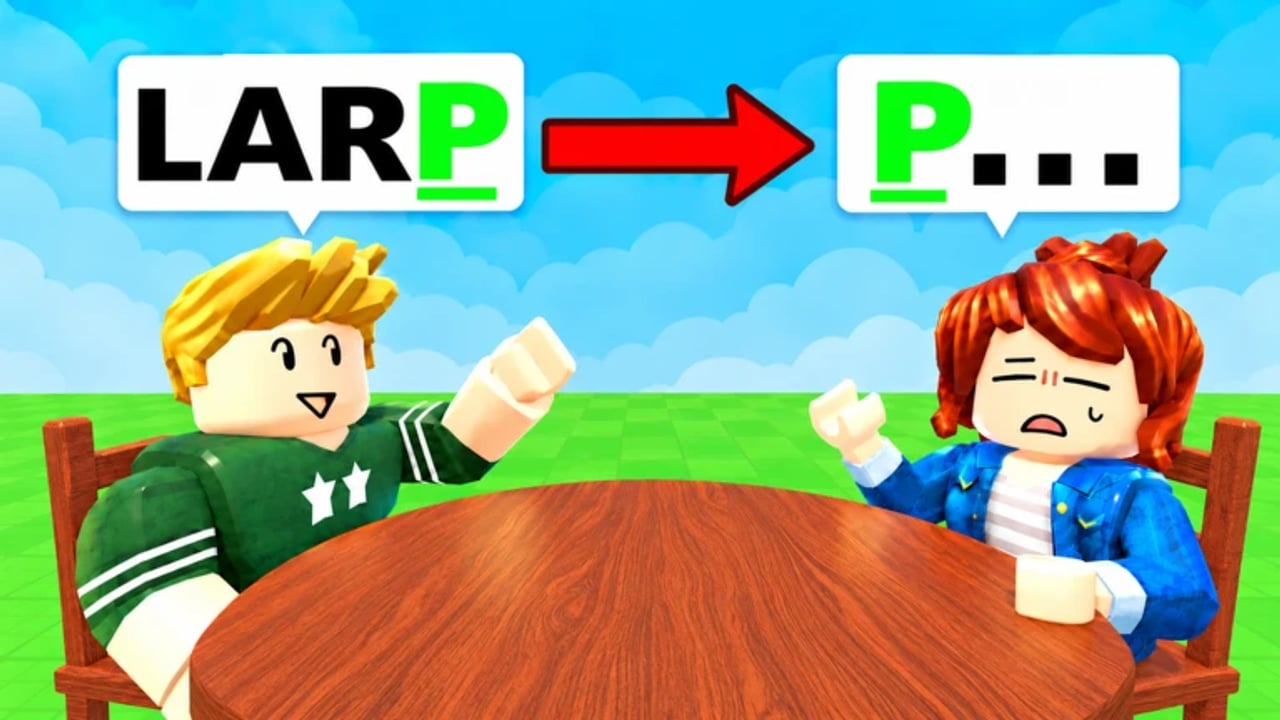
Word Battle! is a Roblox typing race from Table IDK Games. Every round shows one letter. Every seated player must type a word that starts with that letter. Words cannot be reused in the same match. Failures knock you off your chair. Rooms support up to twenty-five players, the dictionary pool sits above five million words across several languages, and Boosts can extend your timer when a letter stalls you. This page is the full rules deep dive plus practical strategy, including ideas highlighted in Mitch Marsell’s Word Battle challenge run.
The three rules that decide every round
Memorize these before you worry about leaderboards.
Rule one - correct starting letter. If the prompt is M, map works and amp does not. The game is strict about the first character. Capitals and typing speed matter less than submitting a legal string.
Rule two - no repeats in the same match. Once any player locks in moon, that exact word is gone for everyone for the rest of the match. Near-duplicates can still work if they are different words (moons is not moon), but do not gamble on spelling variants unless you are sure the dictionary accepts them. The longer a match lasts, the more the easy bank empties.
Rule three - beat the timer. A blank mind is a lost chair. Wrong letter, repeat, and timeout are the three elimination paths. Surviving means you either already know a word or you create just enough time to recall one.
Chair elimination ends your run for that match. Survivors keep receiving new letters while the used-word list grows. That design is why late letters feel unfair to unprepared players and fair to players who saved Boosts and rare-word banks.
Match flow from sit-down to last chair
- Sit at a table chair in a populated room.
- The match starts and shows a letter.
- Type a valid unused word starting with that letter.
- Players who fail fall out of their chairs.
- New letters continue for survivors until the field collapses.
Versus lobbies are pure races. Solo mode uses the same letter and no-repeat rules without opponent pressure, which makes it the correct lab for vocabulary drills. Read the mode comparison on Solo vs Versus after this page.
Strategy from the Mitch Marsell run
Creator challenge videos are useful because they show real panic moments, not polished theory. In Mitch Marsell’s Word Battle short, early letters feel easy, then the word pool thins, hard letters appear, and random guesses sometimes land. The standout tactic is timer pressure: hold a ready word until the timer gets low, then submit so opponents who are still searching feel the crunch and fall.
Use that tactic carefully. If you wait too long and your own mind blanks, you eliminate yourself. The safe version is:
- Know your word immediately.
- Watch how many players are still typing.
- If several look stuck, delay a beat.
- Submit before your comfort limit, not at absolute zero.
The same video shows why “saving words” matters conceptually. You cannot literally reserve a dictionary entry for later in a shared no-repeat pool, but you can avoid burning your personal rare-letter answers on easy rounds when a common word would do. If the letter is C and cat is free, take cat. Keep crypt, cynic, or niche backups for later only if you are playing a language and dictionary slice where those matter. More often, “saving words” means saving Boosts and saving mental energy for Q, X, Z, and J.
Hard letters end runs. Build a recall list before you need it. Start with the Hard Letters guide and the Tier List so you know which prompts deserve drill time.
Speed, accuracy, and submission hygiene
Fast typing only helps if the word is legal. Train this order of priority:
- Legal starting letter
- Not already used
- Spelled correctly
- Submitted with time to spare
Short words are not weak. In a twenty-five player room, a three-letter answer that lands beats a seven-letter masterpiece you never finish. Keep a ladder for each common letter: one short word, one medium word, one backup. When the short word is taken, jump the ladder without debating prestige.
If you mistype, do not stubbornly finish a doomed string. Clear and retype if the timer allows. Hesitation loops are how mid-tier players fall while veterans calmly submit oak or owl.
Boosts as a rules tool, not a flex
Boosts extend the time you have to think and type. They do not invent vocabulary for you. Best moments to activate:
- The letter is Q, X, Z, J, or another personal weak spot.
- The timer is nearly empty and you almost have a word.
- The match is deep and common words are gone.
Worst moments: spending a Boost on A in round one because you want a fancy word. Full conservation plans are on the Boosts guide. Pair Boost timing with hard-letter drills and you will survive deep lobbies far more often.
Language choice changes the puzzle
Word Battle supports English, Portuguese, Spanish, German, French, Italian, and Indonesian. Each language uses its own word set. Switching languages is not a cosmetic skin; it changes which strings count as valid and which letters feel hard. Climb in the language you can type fastest, and practice a second language in Solo if you want broader vocabulary. See Languages for picking a lane.
Mid-match decision tree
When a letter appears, run this tree in under a second:
- Do I have a short word ready? Submit or lightly delay for pressure.
- Is my short word already used? Climb to backup two.
- Is this a hard letter? Consider Boost immediately if the first recall fails.
- Am I blanking with three seconds left? Boost now; do not pride-check the timer.
After you are eliminated, write the letter and the word you wish you had. That notebook habit turns losses into tomorrow’s Solo warm-up.
Practice plan that matches the rules
- Day 1-2: Finish Getting Started, play Solo for ten minutes, then one Versus match focused only on clean submissions.
- Day 3-4: Drill hard letters and read the Boosts page. Play Versus with a rule: never Boost before letter difficulty justifies it.
- Day 5+: Add timer-pressure experiments in safer mid-game spots, check the Tier List, and track leaderboard progress without forcing risky delays.
Word Battle rewards calm systems over clutch heroics. Learn the three failure rules, protect your Boosts, keep short-word ladders, and treat every elimination as a letter to drill. When the lobby shrinks to two chairs, the player with a ready bank and a cool timer finger usually stays seated.
Frequently Asked Questions
Quick answers to the most common Word Battle questions.
What are the core rules of Word Battle?
Type a word that starts with the given letter, never reuse a word from the same match, and submit before the timer ends. Breaking any rule knocks you off your chair.
What is the timer pressure strategy?
If you already know a valid word, you can wait until the timer runs low before submitting so opponents panic. Only delay if you are sure you can still submit safely.
Can I reuse a word someone else typed?
No. Any word used in the current match is blocked for every player, including the person who typed it first.
How many players can share one room?
A room can hold up to twenty-five players racing the same letter prompts.
Where should I practice before serious Versus matches?
Use Solo mode to learn hard letters and pacing, then move to Versus. Compare both modes on the Solo vs Versus guide.